Malta Spitfire’s-If you are a follower of my work you will already know that I love the Supermarine Spitfire and I’m absolutely smitten about Malta Spitfire’s having built more than a few over the years.
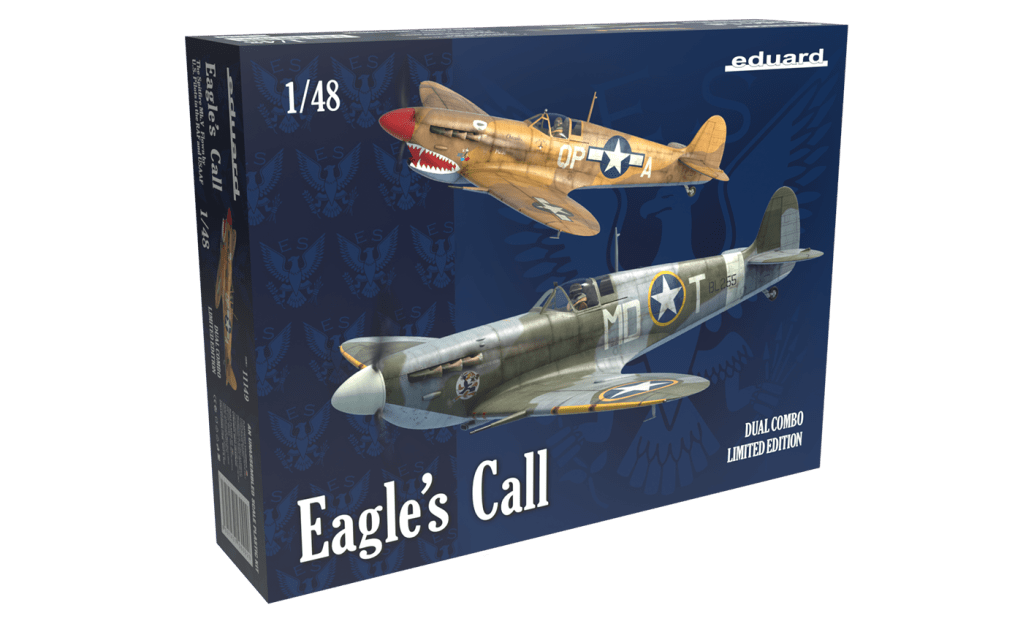
So when I was invited to join a group build at the Black Rifle Model Worx to build any British or American subject I thought that it would be a good excuse to break out my 1/48 Eduard Eagles call combo set. This Eduard release gives you two Spitfire’s in one box-A Spitfire Mk Vb Tropical and a Spitfire Mk Vc Tropical.
Rhapsody In Blue…..
There are some fantastic schemes offered in the Eduard model kit covering a range of Spitfire’s that were in service with the United States Army Air Force and RAF in WWII. The one that stood out to me was the Spitfire Mk.Vc in RAF No. 185 Squadron markings flown by Sgt. Claude Weaver III.
Claude Weaver III DFC, DFM & Bar (August 18, 1923 – January 28, 1944) was an American pilot who joined the Royal Canadian Air Force during World War II. He was the youngest allied flying ace of the war and was credited with 12.5 aerial victories. He was shot down and taken as a prisoner of war for one year before successfully escaping captivity, however he was later shot down a second time and killed.
Claude Weaver III DFC, DFM & Bar
Siege of Malta
Sergeant Weaver arrived in the United Kingdom on November 14, 1941. Weaver began attending additional training and was graded to be an above average pilot. From April to May 1942, he was assigned to 412 Squadron in the Middle East. In late June, Weaver was attached to No. 185 Squadron, RAF operating Supermarine Spitfires out of Malta.
On July 17, Sergeant Weaver downed his first enemy aircraft, an Messerschmitt Bf 109. On July 22, he downed two more Bf 109s, and then two more the next day. These victories made Weaver, aged 18, the youngest Allied flying ace of the war. On July 24, Weaver shared a sixth victory with a fellow pilot, downing a Junkers Ju88 bomber. Weaver was awarded the Distinguished Flying Medal on August 8.
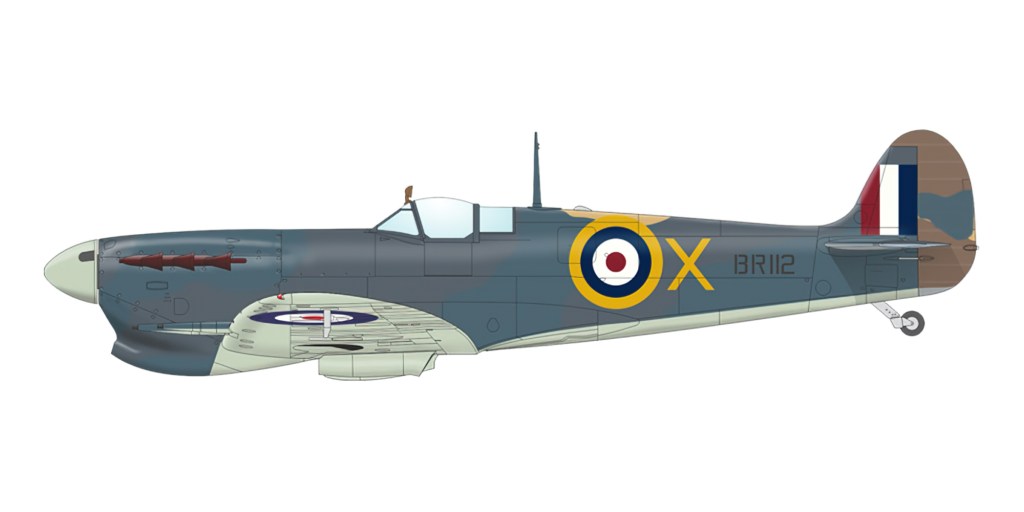
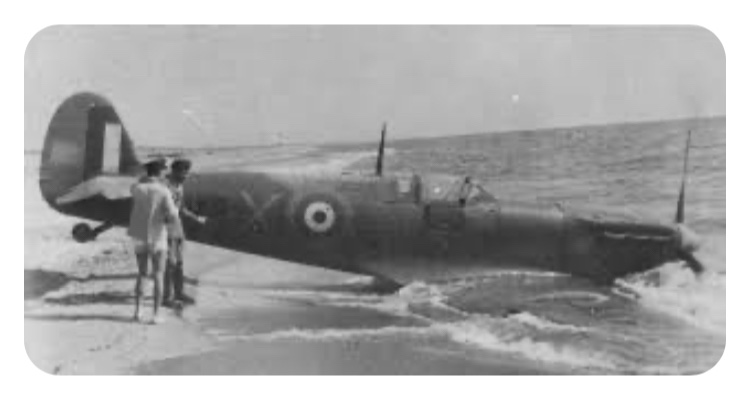
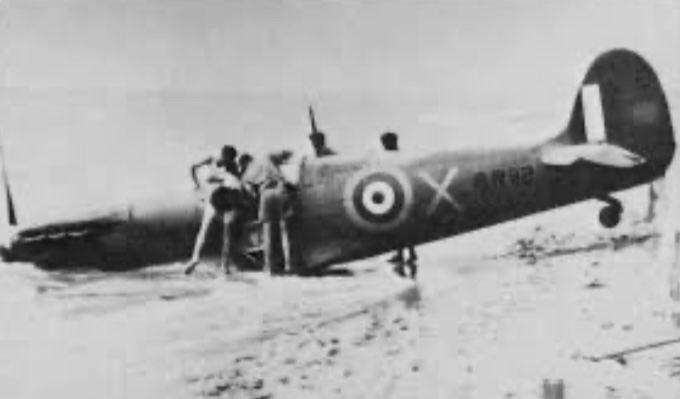
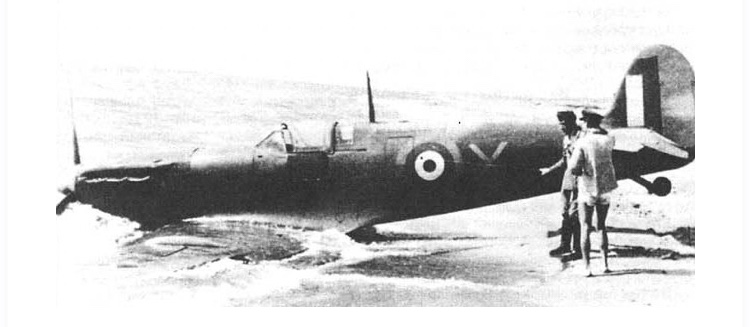
On September 9, Sergeant Weaver participated in a combat mission over Sicily. During the mission, Weaver downed an Italian MC.202, making him a double ace with 10.5 victories. Weaver himself was shot down shortly afterwards in Spitfire BR112 and crash landed on a beach in Scoglitti. Before he had a chance to destroy his plane, Weaver was arrested by Carabinieri and listed as missing in action by his squadron.
Time to build a Spitfire!
If you have not had the pleasure of building the new tool Eduard 1/48 Spitfire’s I can throughly recommend them. The higher end limited edition boxings like this one have a finely detailed airframe with every rivet and panel on the aircrafts surface faithfully reproduced. This kit also came with pre painted photo-etched detail parts to add some extra realism to the model.
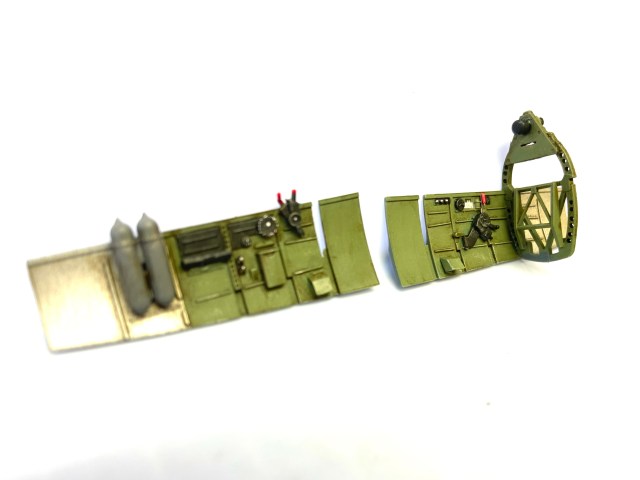
As with most aircraft models we commenced work in the cockpit. The details of the instrument panel, sidewalls and seat are all impressive. Just to add an extra touch of detail I drilled out the lightening holes in the cockpit framing:
The rest of the cockpit assembly was quite straightforward, I painted the inner parts in the usual RAF Interior Green and added the kits photo etched parts as required. Everything was sealed with clear varnish so that I could add scratches and grime to the cockpit, giving it a well worn appearance.
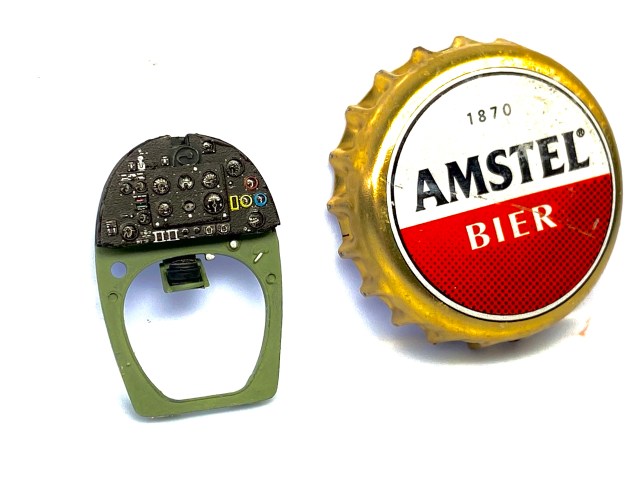
The Spitfire’s Instrument Panel in 1/48 scale.
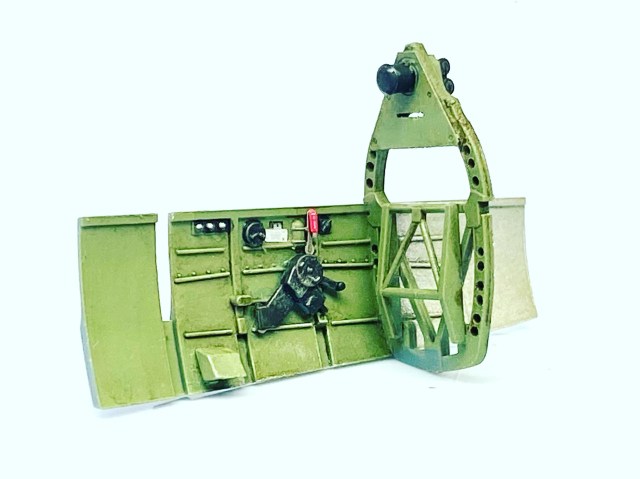
Here you can see the Interior detail after paint and weathering.
Once the cockpit was completed it was a simple use of assembling it into the fuselage and adding the wings, tail planes and flying surfaces. My next task was to think about paint and when it comes to Malta Spitfire paint schemes there is no more contentious issue in aircraft modelling!
This is where my interest , or date I even say love of this subject really comes into its own. There were so many Spitfire’s in Malta, some delivered in factory fresh paint, some repainted on the American aircraft carriers that brought them to the Mediterranean and some that that were painted in the field with whatever paint was left over on the island. They were worked hard and flown hard, so they were pretty beaten up in 1942 and so they were well weathered, dirty , stained and war weary fighter aeroplanes that along with the Hawker Hurricanes came to the defence of Malta.
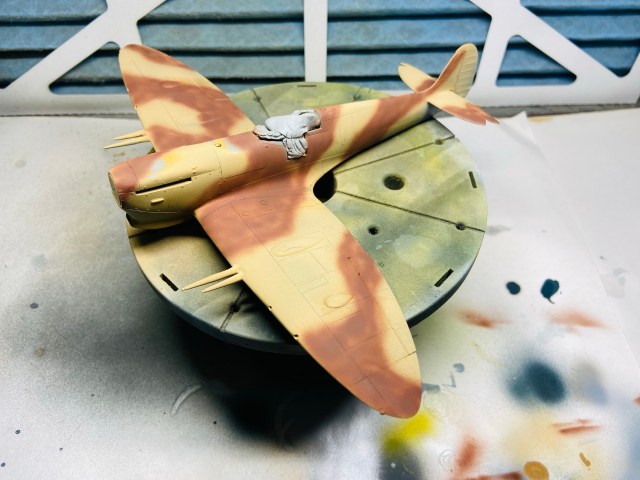
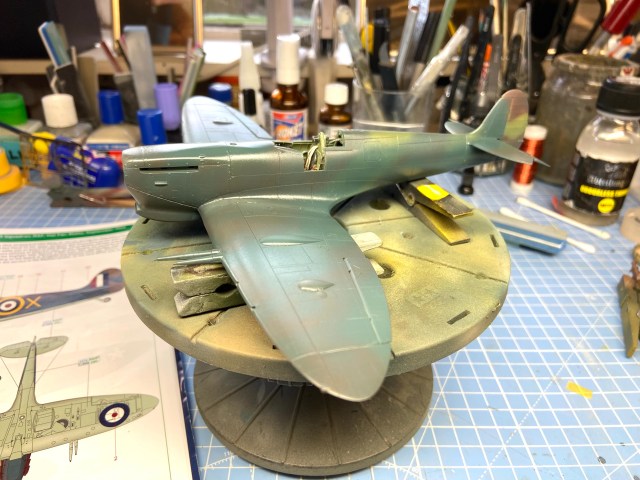
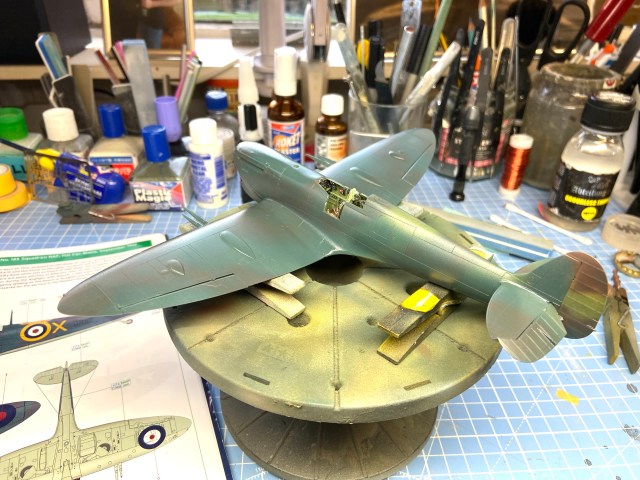
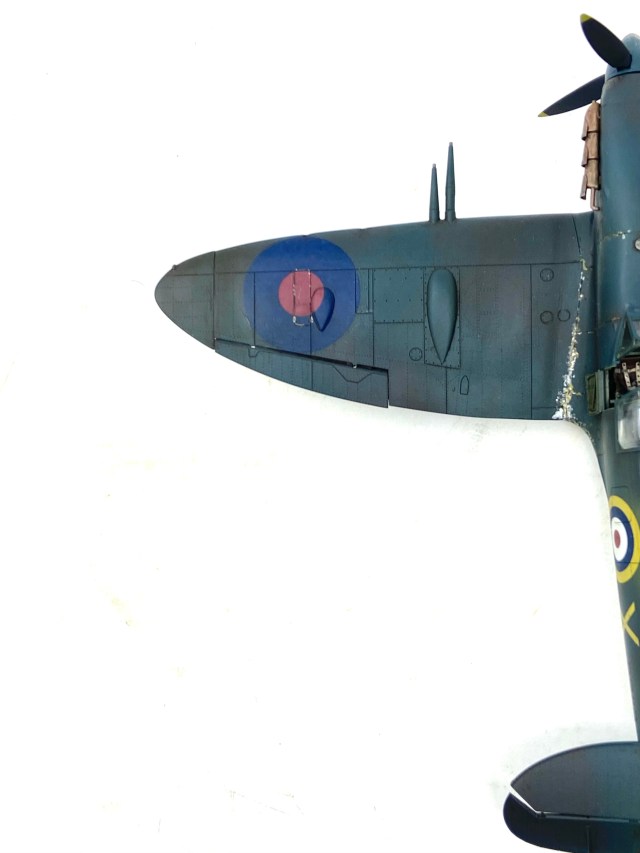
After reading up from my extensive reference library, I decided to apply the original RAF scheme of Dark Earth and Middle Stone over Azure Blue Underside’s. I would then mix my own shade of local Malta Blue and overspray it in thin coats much as the original aircraft appears to look in the photographs I have. I used my own mixes of Tamiya Acrylics for this model.
Above the original camouflage patten is roughly applied before the thinned local blue shade is applied as below taking note to leave out the rudder and area aft of the cockpit to match our reference photos.
One all the points were cured I applied a clear gloss coat to protect the work in preparation for the decals and weathering.
So how about them Eduard decals eh?
Unless you’ve been living under a rock you will be aware that Eduard are now producing their decal sheets in house and they are not the same as the decals in previous releases. This has caused controversy in the scale modelling community and I can see why. The bottom line is that they are not as good as they used to be. That and the added headache of the film that lifts off after the deal has dried can cause the enthusiast a lot of problems. I tackled this by applying the decals in the normal way and seeing what the result would be. The decals went on well enough, but it took a lot of setting solution to get round pronounced curves such as the cannon bulges on the wings. And as I was adding more solution the film began peeling away. So in the end I remove all the decal film which did give me a nice, painted on effect but it was a lot of inconvenience for me.
Here is how the model looked once the decals were applied.
Now the model was coming into its last phase , getting the canopy and landing gear painted , then adding some were and tear to the airframe . For this I used Mig Ammo Night Black panel line wash which would highlight the panels, rivets and fasteners on the airframe.
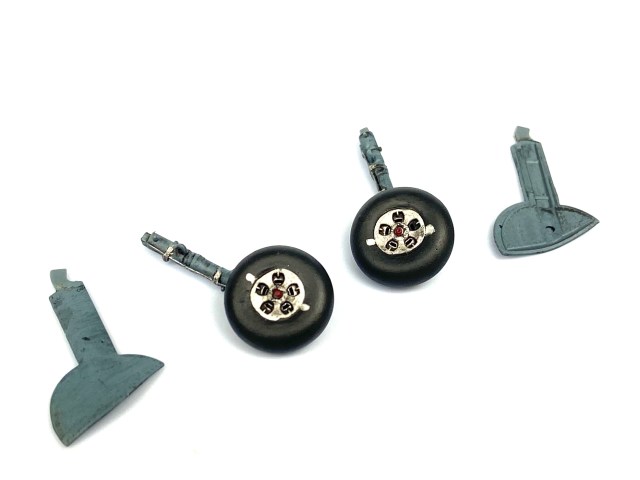
Detailing the kits landing gear with hydraulic lines and hub markers adds another touch of realism.
Bringing it all together….
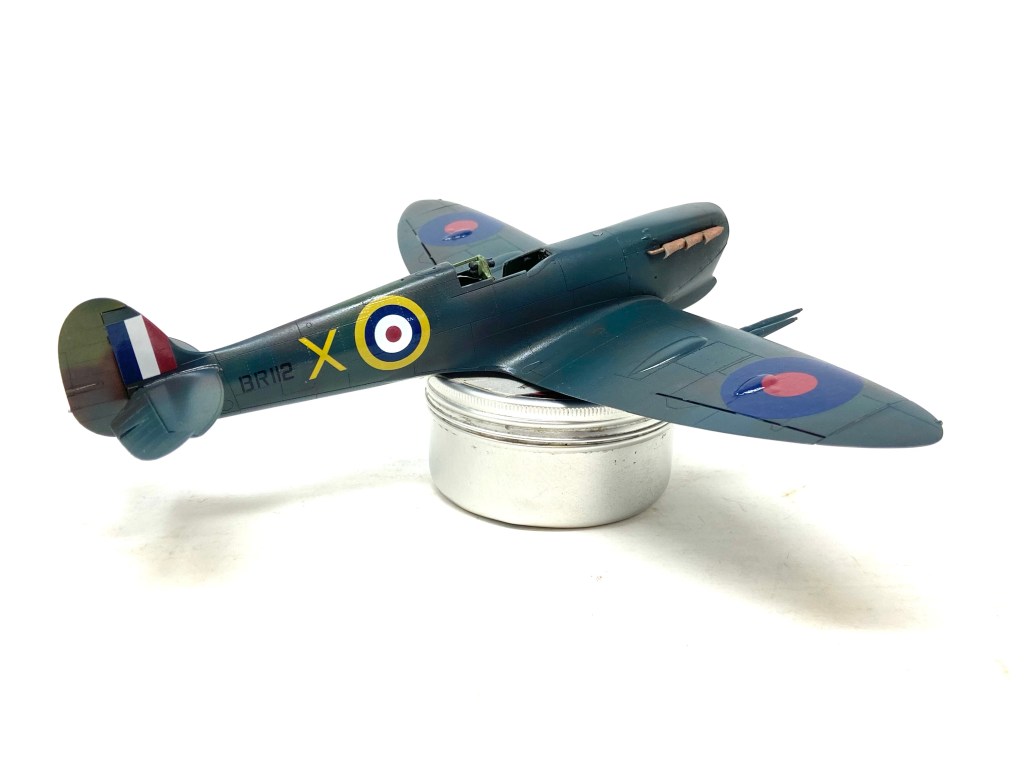
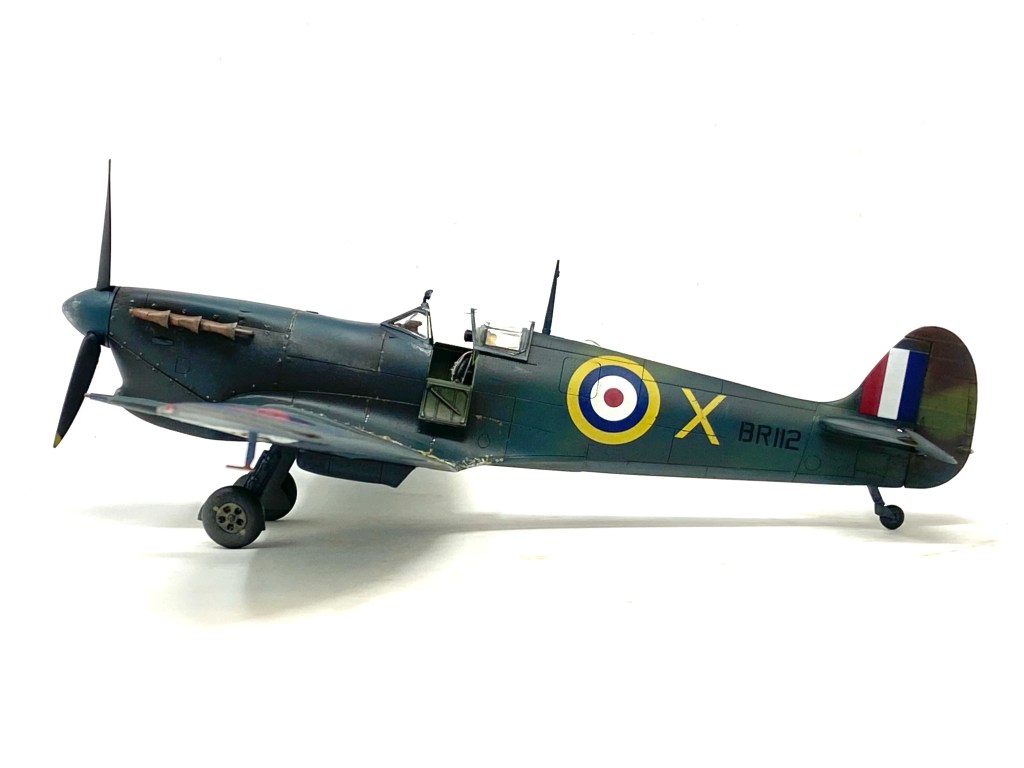
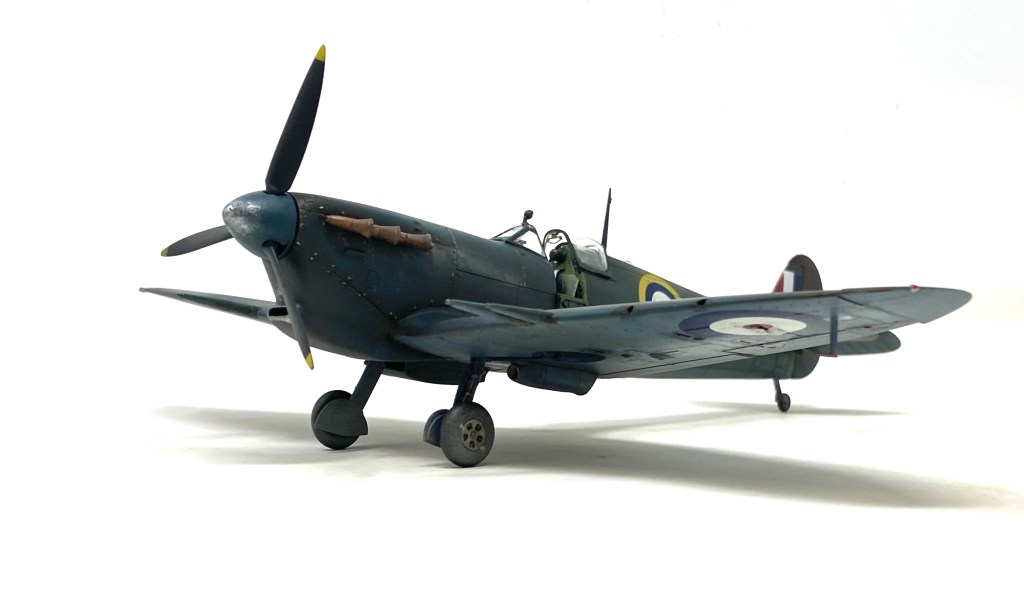
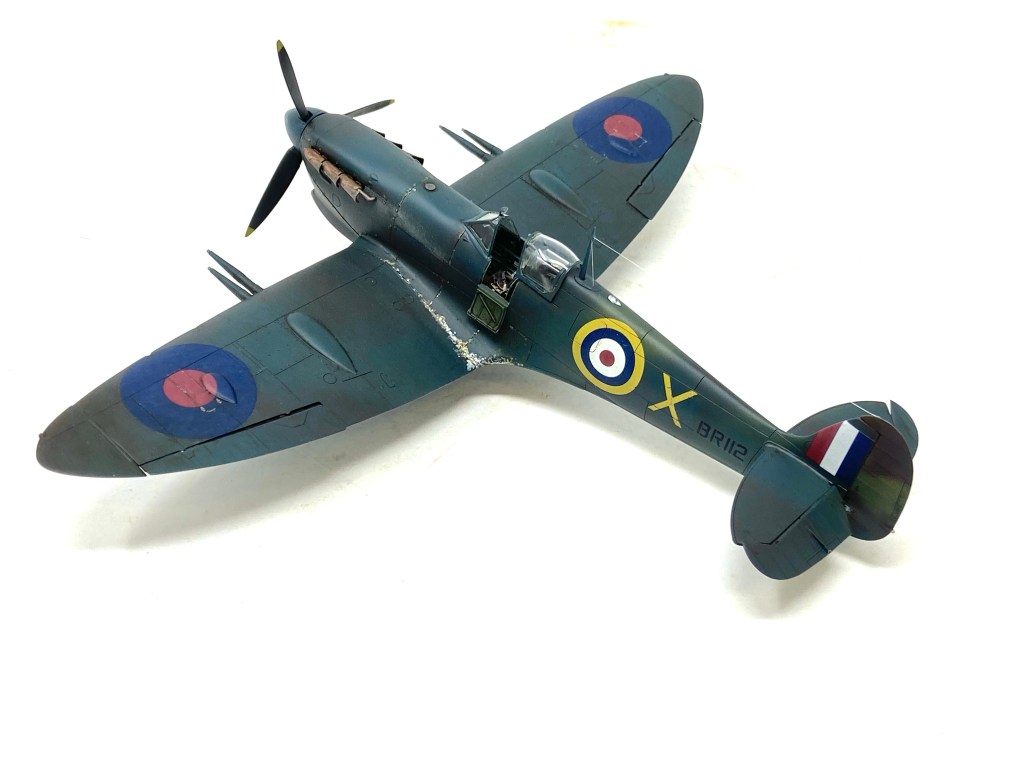
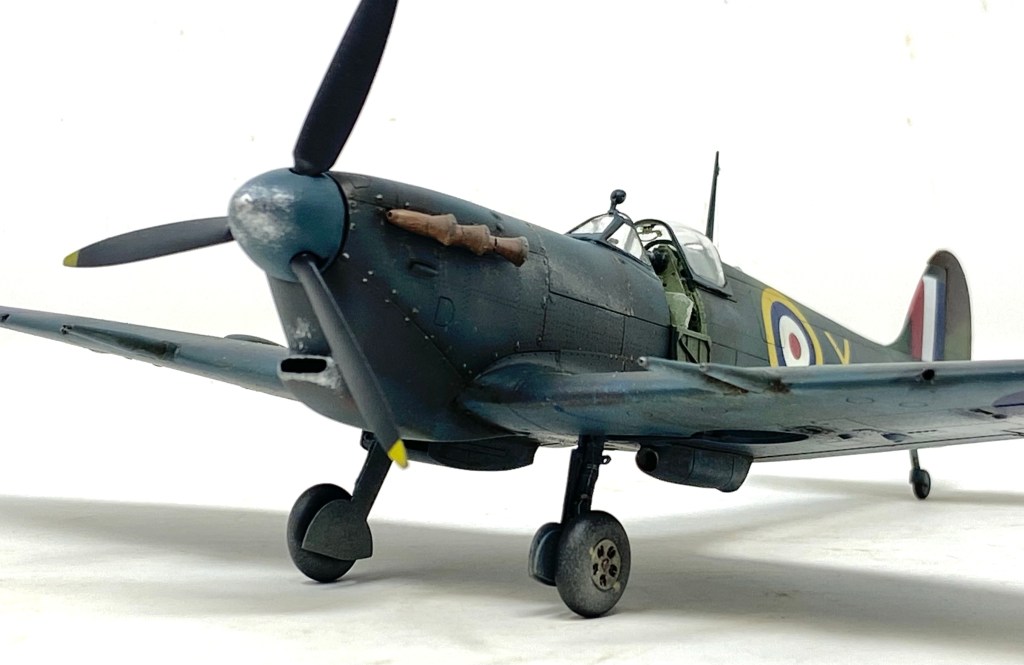
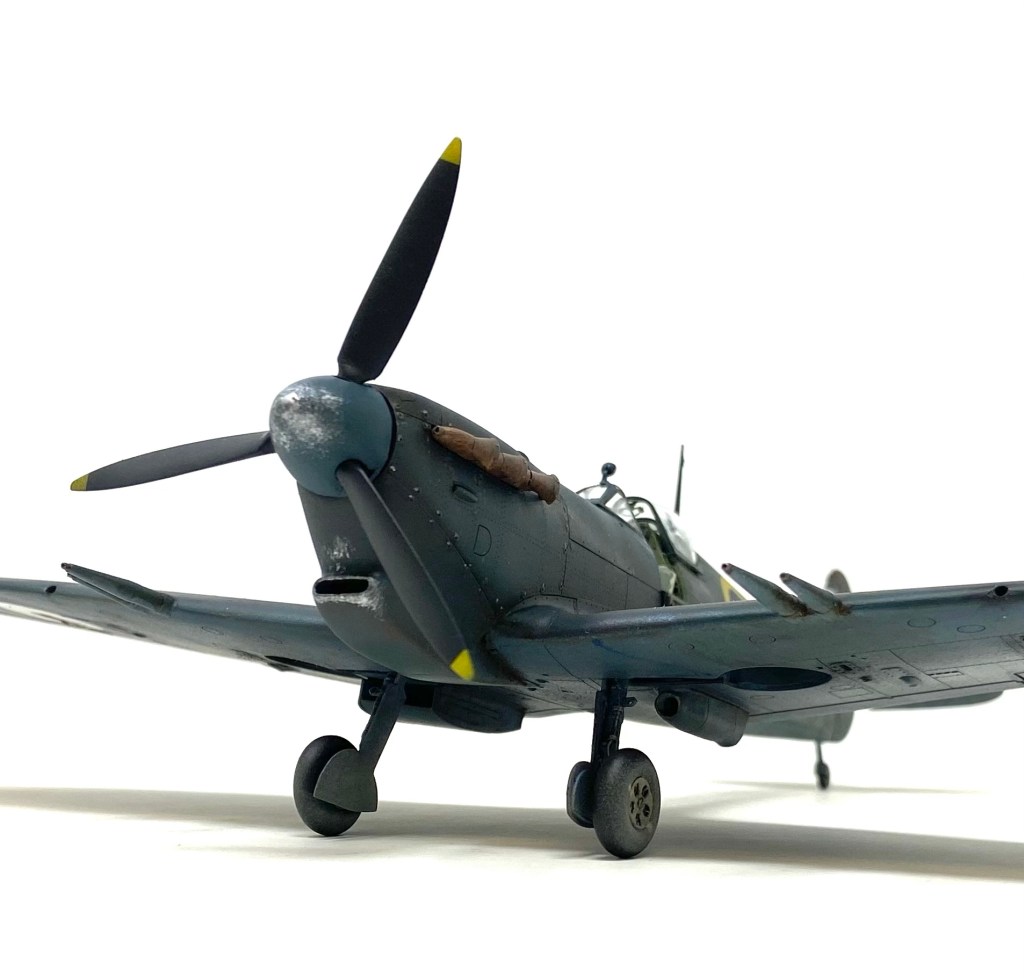
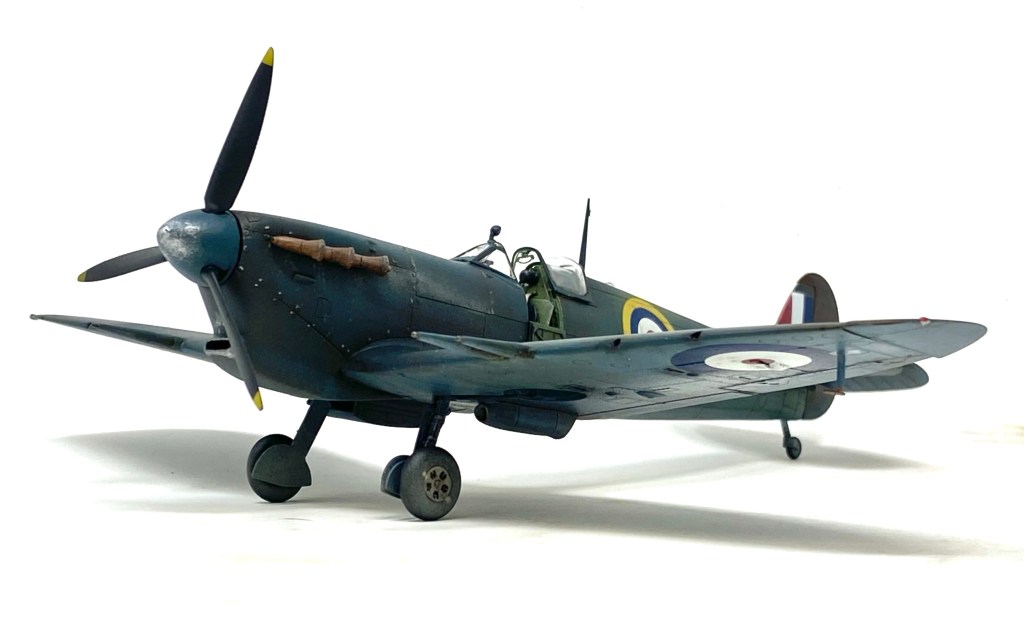
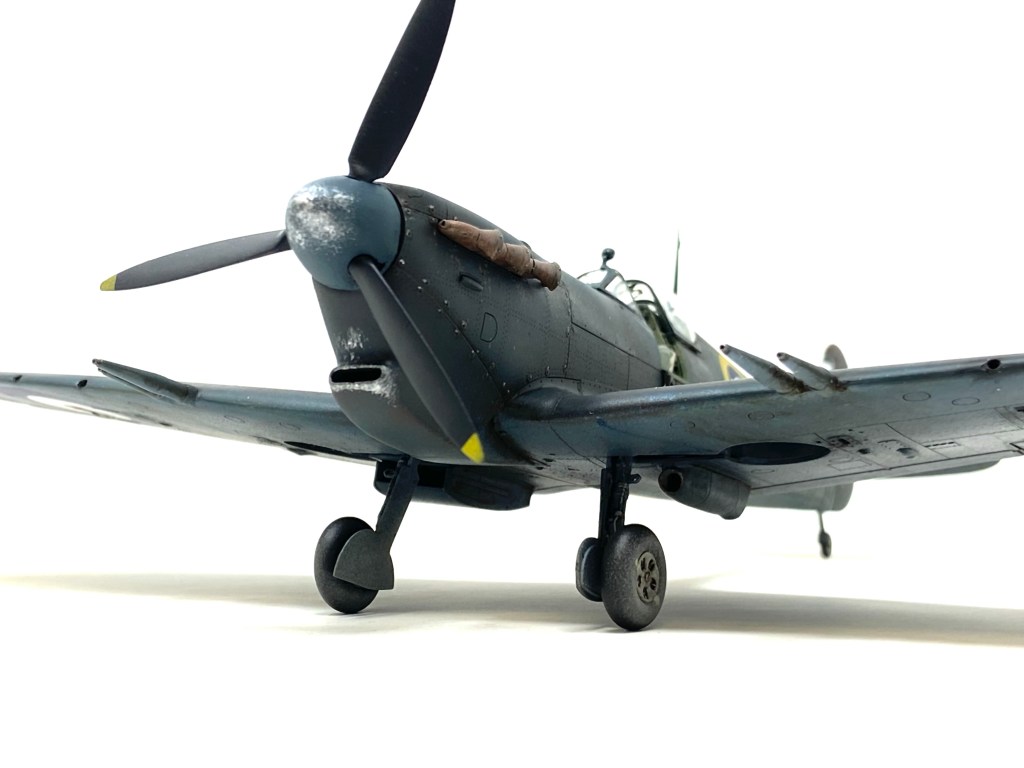
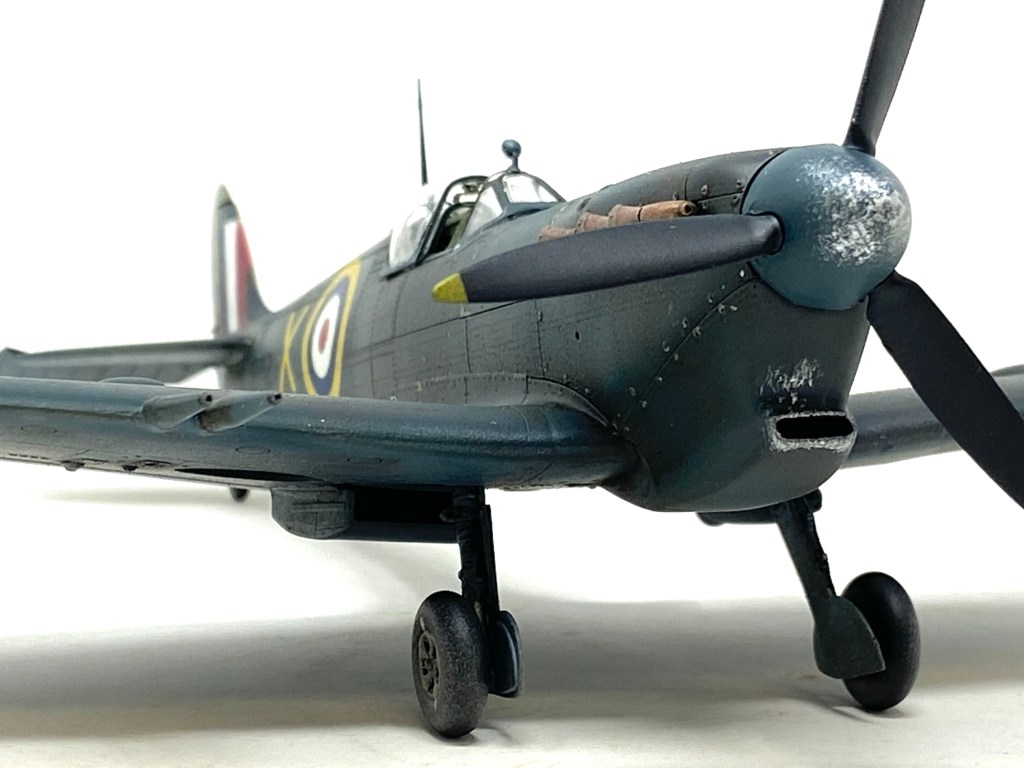
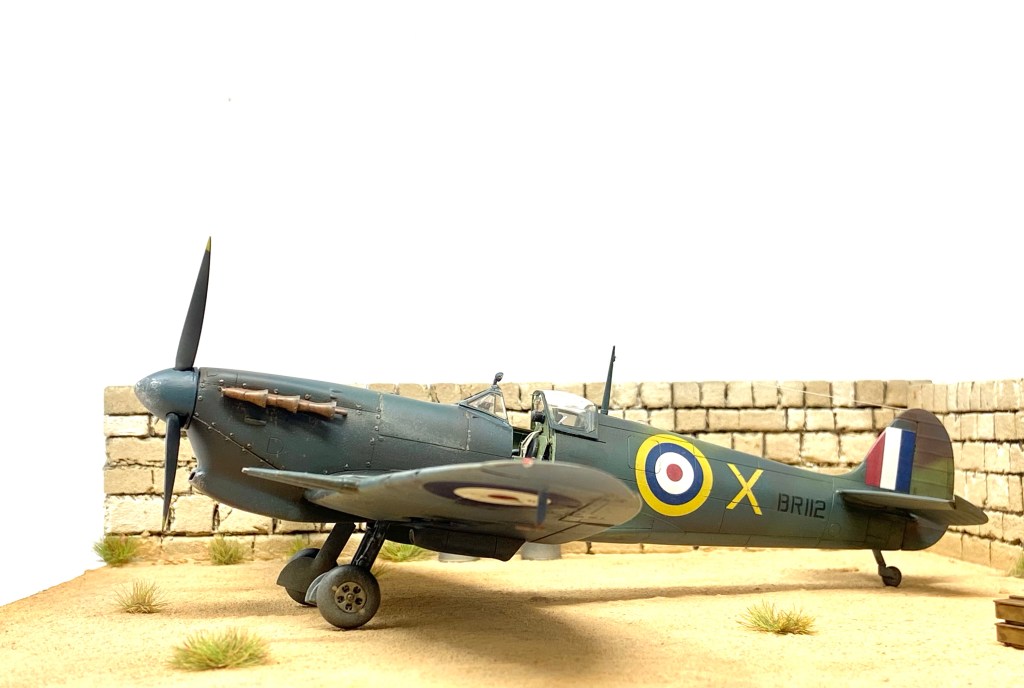
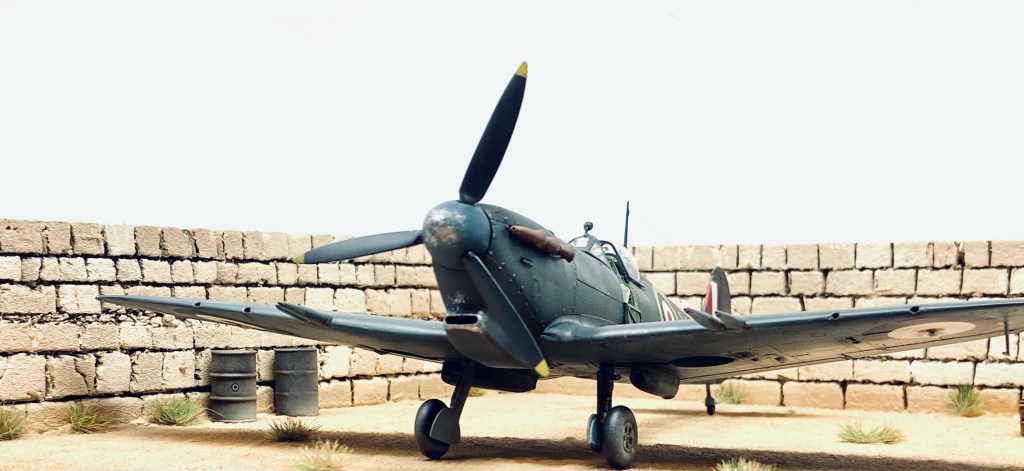
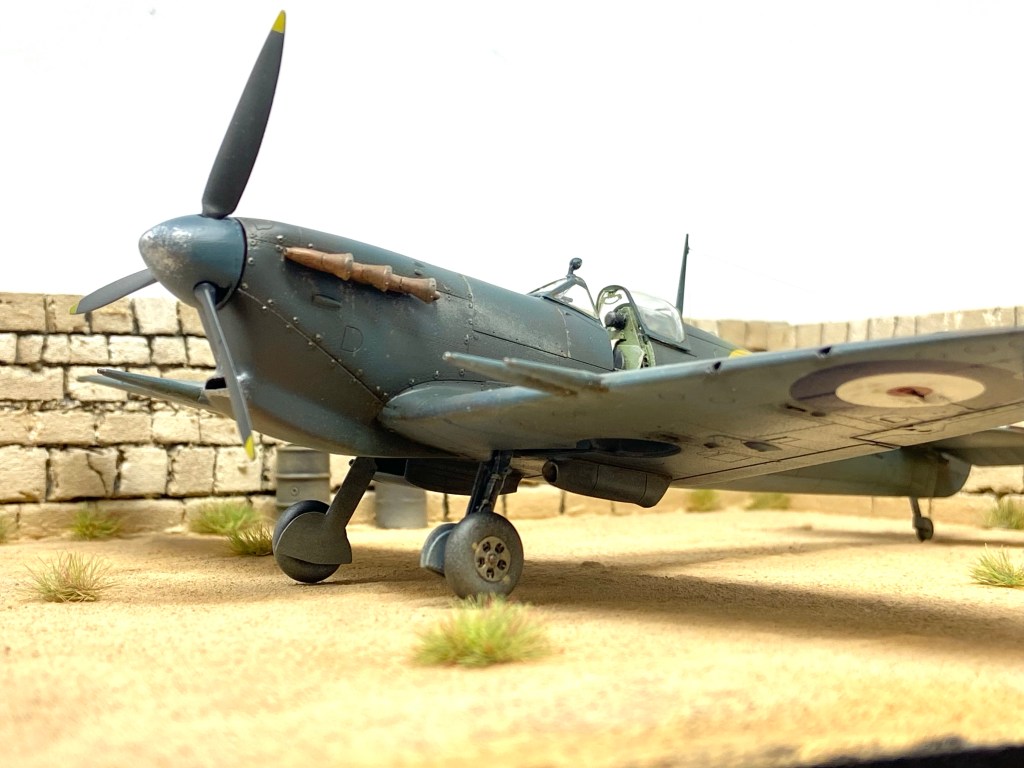
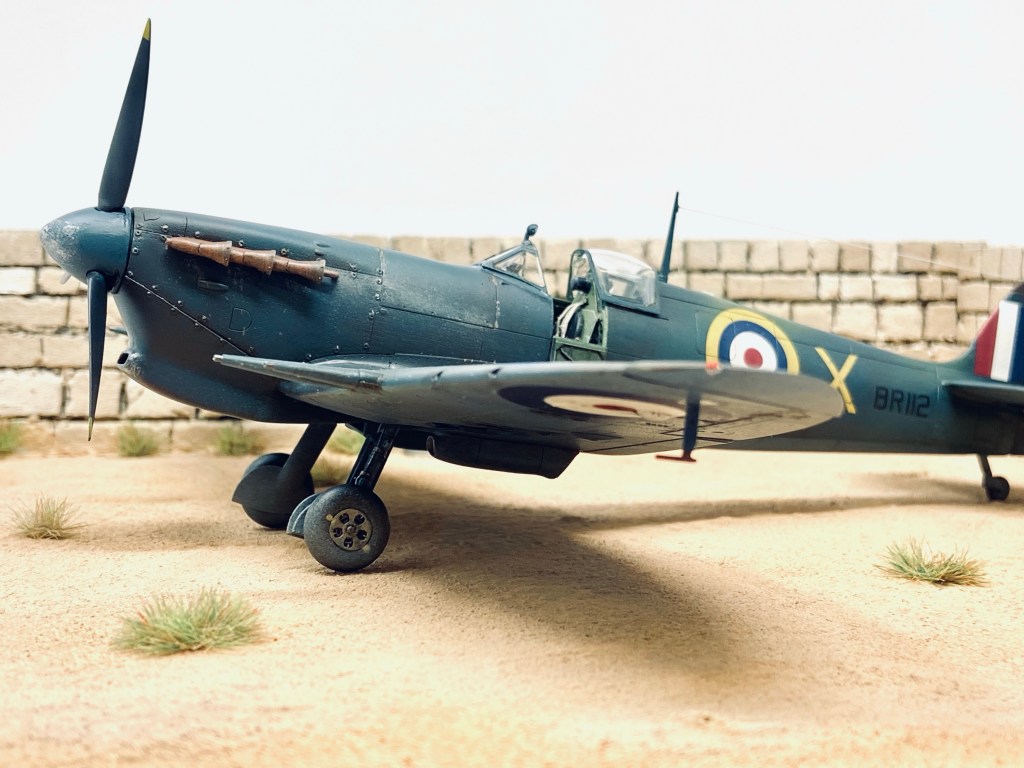
With applications of metallic scratches, oil, fuel and exhaust satins with a touch of dirt and dust on the wheels my Spitfire was complete. So here she is -Supermarine Spitfire BR112, in service with No 185 Sqn, RAF, Hal Far, Malta, September 1942.
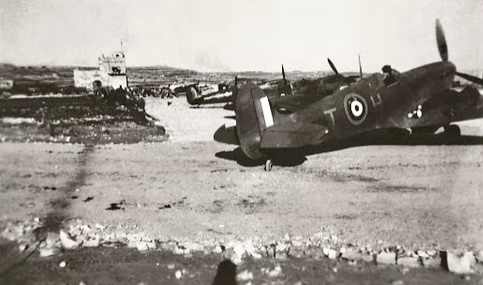
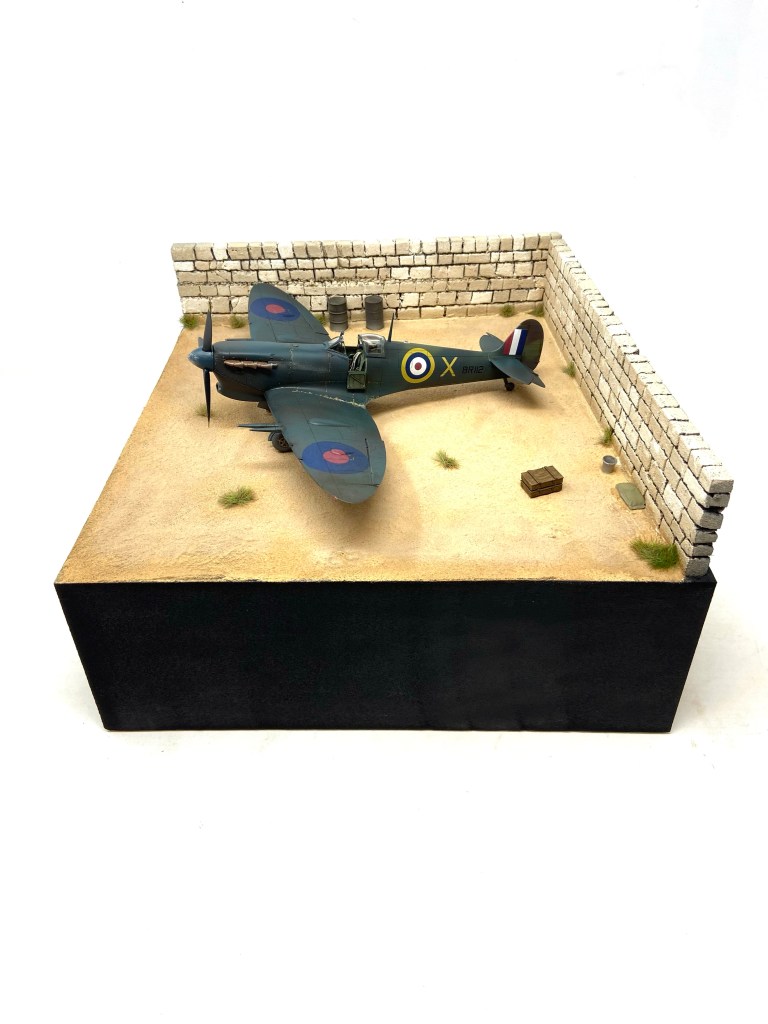
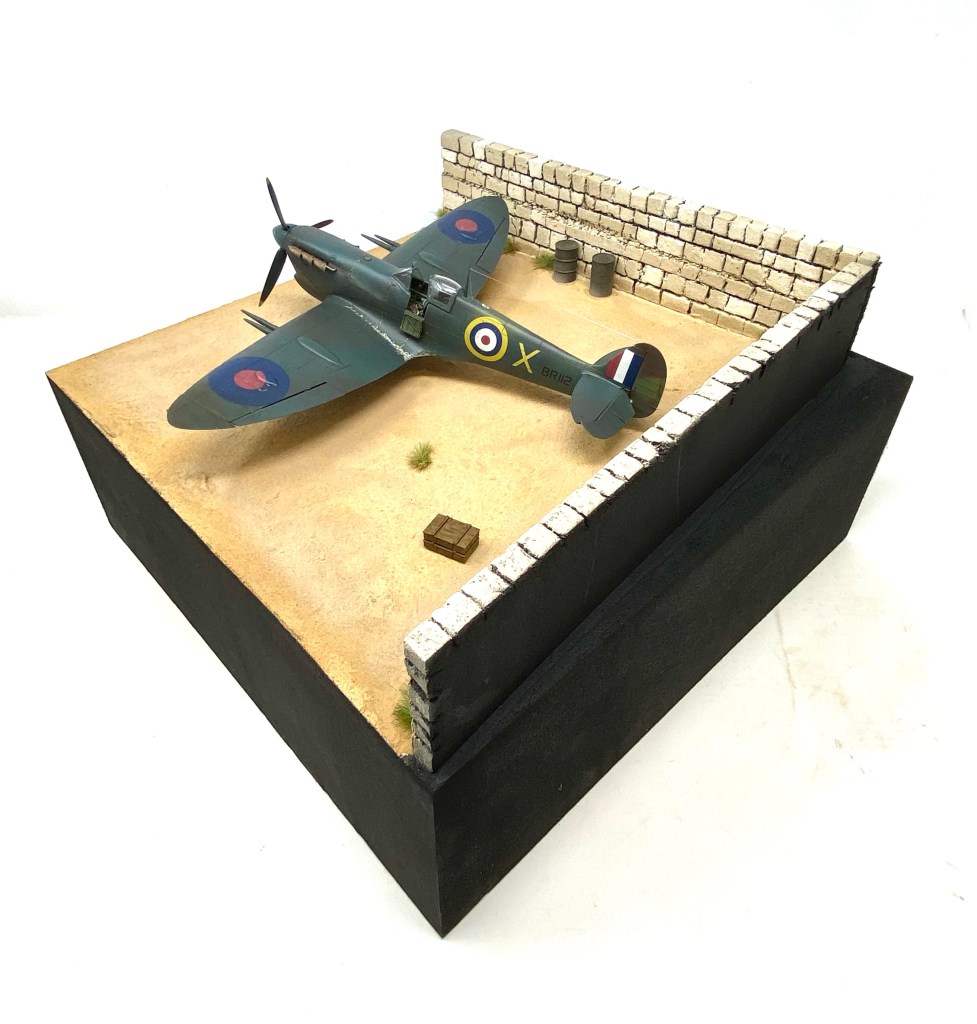
Having finished the model and allowing a week or two to pass, my mind wondered to thinking this model would look great in a contextual setting so I studied photos of operational airfields during the siege of Malta in 1942.
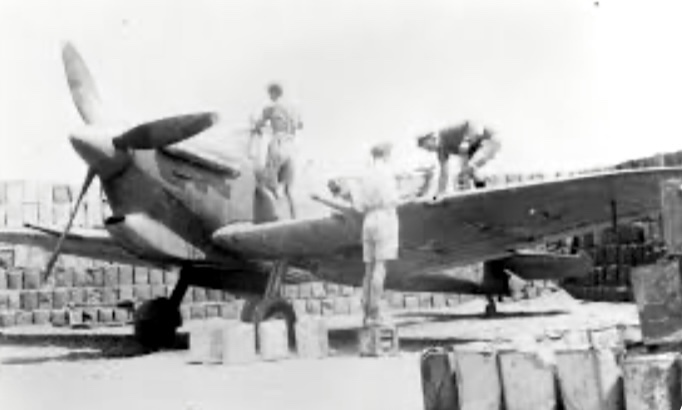
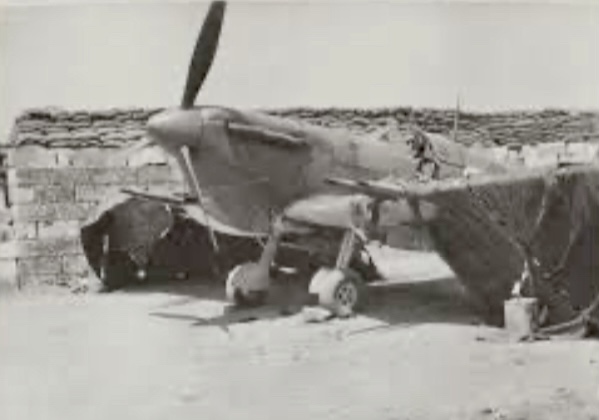
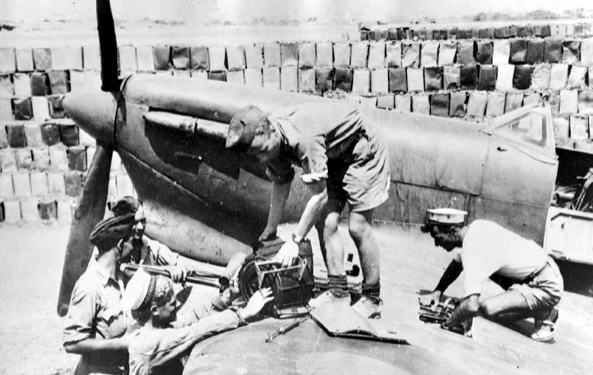
The photographs below show how the RAF made use of any materials they had to build blast pens for their aircraft. In 1942, the island of Malta was the most bombed place on Earth so living and working on the airfields was hazardous for the aircrews as much it was for the people of Malta who endured such a horrific campaign being constantly bombed day after day by the nazi regime.
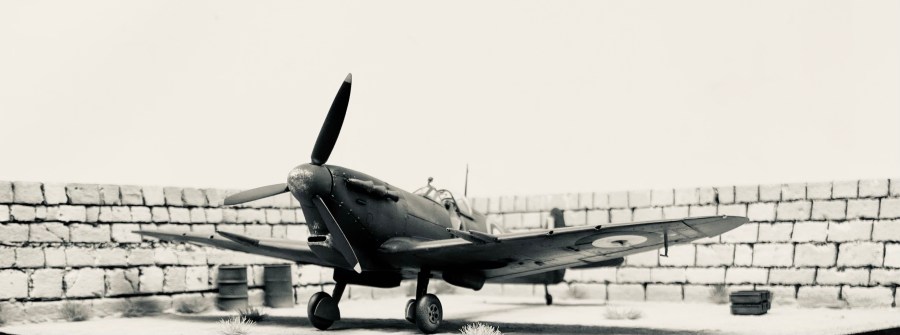
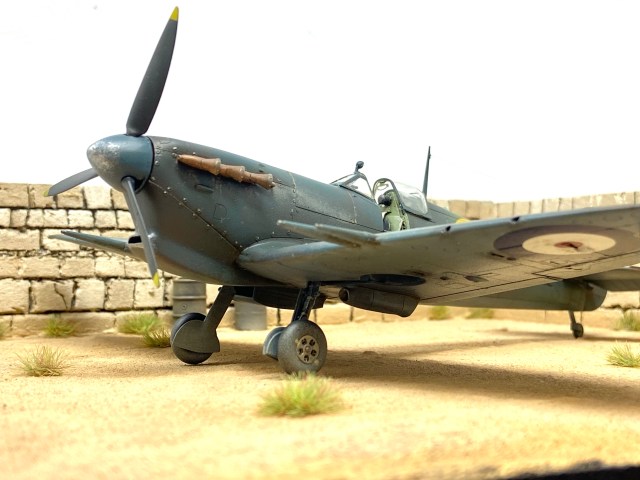
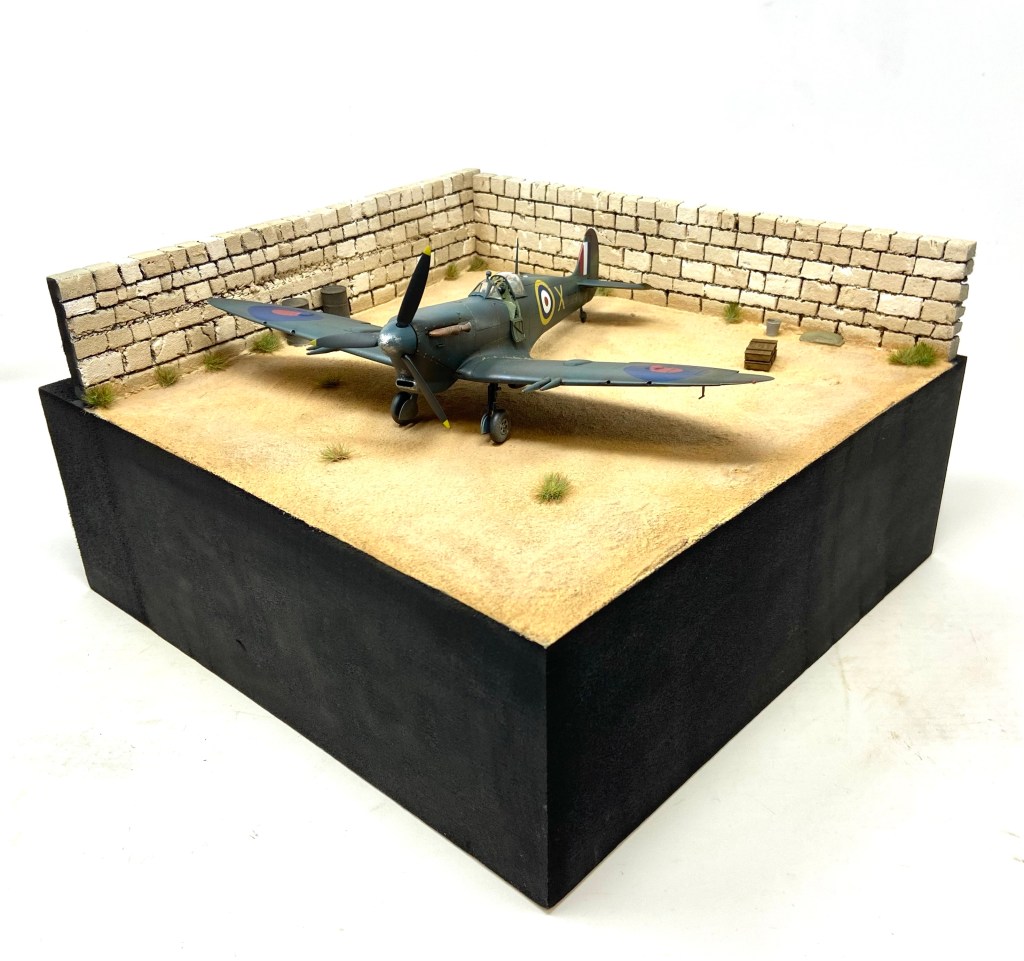
Taking my inspiration from history I crafted my own Malta airfield blast from styrofoam and painted it with oils and acrylics to show how our Spitfire might have looked just before its next mission….
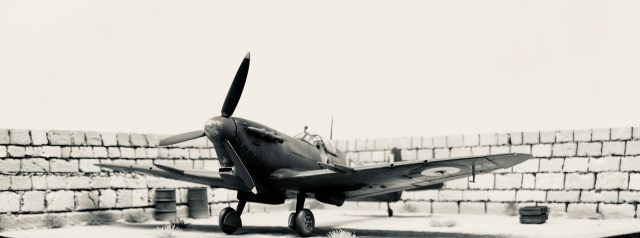
This B/W photo of the model has that history book appearance to it.
I hope you have enjoyed this build of one of my favourite subjects. Thanks for visiting and I hope you return to see the next project from The Scale Model Hangar Studio. Until next time, take care and Happy Modelling!


















 THE SCALE MODEL HANGAR